


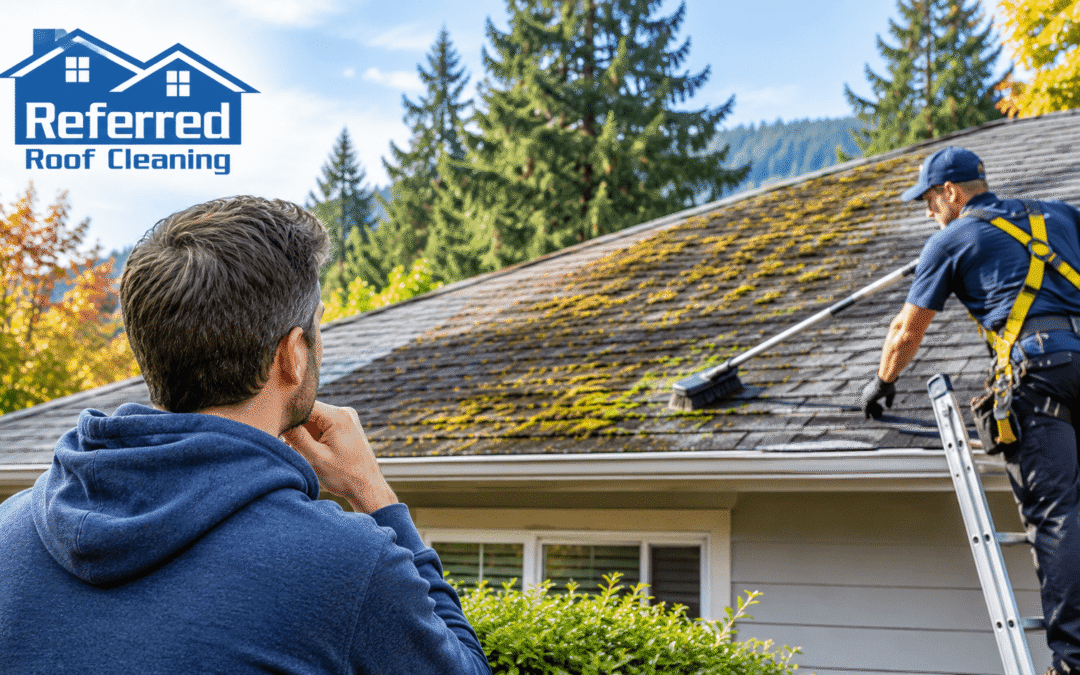
A clean roof lasts longer. It protects your shingles, keeps moisture from building up, and saves you from repairs down the road. Algae, moss, lichen, dirt, and leftover debris all wear a roof down slowly, and cleaning it properly before you apply an algae or moss treatment helps that treatment actually work.
So, should you grab a ladder yourself or call in a professional? It depends on your roof type, its condition, the buildup, and your cleaning plan. This guide walks through safe roof cleaning methods, prep steps, common mistakes, and when it’s smarter to hand the job to someone else.
Can I clean my roof myself before applying a treatment?
Yes, if your roof is in good shape and the job is simple. Clearing off loose leaves, twigs, and surface debris is a perfectly reasonable DIY task, and it gets the roof ready for treatment.
Just remember that roofs can be dangerous to work on. Wet shingles, a steep pitch, or a coating of moss and algae can make footing treacherous, and the wrong technique can damage the roofing itself.
Before you start:
- Look for cracked, loose, or missing shingles.
- Clear loose debris from the ground or from a stable ladder.
- Skip the hard scrubbing and scraping.
- Never walk on a wet or slippery roof.
- Read the treatment manufacturer’s prep instructions first.
For a bit of surface debris, DIY is usually enough. Heavy moss, thick algae, or lichen that has spread widely is a different story, and that’s where a professional should step in.
What should I use to clean my roof before treatment?
It depends on your roofing material and what’s growing on it. The wrong roof cleaning chemical can harm shingles, metal coatings, gutters, and the plants around your house.
Here’s what people commonly use:
| Material | Used for | Keep in mind |
| Soft-bristle brush | Light surface debris | Don’t scrub hard. |
| Garden hose | Gentle rinsing | Use low water pressure. |
| Roof-safe cleaning solution | Algae and surface stains | Check that it’s compatible with your roof. |
| Manufacturer-approved treatment | Moss and algae control | Follow the label. |
| Protective coverings | Shielding landscaping | Cover nearby plants when needed |
For asphalt shingles, use a cleaner that’s specifically approved for them. Some manufacturers recommend certain sodium hypochlorite-based solutions, while others have their own requirements. Steer clear of household detergents, harsh acids, and anything unapproved, and always read the label before it goes on your roof.
Is pressure washing safe for cleaning a roof before treatment?
Usually not. On asphalt shingles, a pressure washer can blast off the granules that protect the roof, loosen the shingles, and force water up underneath them. That shortens the roof’s life and can leave you with expensive repairs.
Here’s what works better:
- Low-pressure rinsing: A gentle stream of water, but only if your shingle manufacturer says it’s okay.
- Soft washing: A cleaning solution made for roofs, applied at low pressure to kill algae and other growth.
- Clearing debris by hand: Pick off leaves and branches without scraping the surface.
- Calling a pro: Trained crews can handle heavy buildup and roofs that are hard to reach.
Metal, tile, and other roofing materials follow different rules, so check the manufacturer’s guidance rather than assuming one method suits every roof.
How do I remove algae, moss, and lichen from my roof?
These three are different problems, so they need different fixes. Figure out what you’re dealing with first, and you’ll pick the right treatment without hurting the roof.
Algae
Usually show up as dark green or black streaks on asphalt shingles, mostly in damp, shady spots. To deal with it:
- Use a roof-safe algae cleaner.
- Apply it the way the instructions say.
- Don’t brush aggressively or use high pressure.
- Give it the full recommended time to work.
- Rinse only if the manufacturer tells you to.
Moss
Thrives in damp, shaded areas and holds moisture against your roofing. Thick patches can even lift shingles and get in the way of drainage. To remove it:
- Don’t yank or scrape it off.
- Apply a manufacturer-approved moss treatment.
- Let the moss die and loosen on its own.
- Take off what’s left only when you can do it without damaging the shingles.
If the moss is heavy, call a professional roof cleaner.
Lichen
Forms hard, crusty patches that grip the roof tightly, which makes it tougher to remove than algae or moss. Use a suitable roof treatment and give it plenty of time. Don’t go at it with metal tools or a stiff brush, because that can scrape off the protective granules on your shingles.
When should I hire a professional roof cleaner?
Call one when the growth is heavy, the roof is hard to get to, you’re worried about its structure, or it needs a specialized treatment. A pro is especially worth it in these cases:
- Heavy moss. Thick moss traps moisture and can lift shingles.
- Widespread algae stains. Big affected areas often need specialized solutions.
- Stubborn lichen. Growth that’s stuck on tough surfaces needs careful handling.
- Steep or high roofs. Professionals have the training and gear to work safely up there.
- Damaged roofing. Lose, cracked, or missing shingles should be checked before any cleaning.
- Not sure what method to use. A pro can match the cleaning approach to your roofing material.
A professional will also inspect your roof for obvious damage to recommend the best course of action as part of their on-site service.
How does DIY roofing compare to hiring a professional to clean your roof?
Regardless of which method you choose, you will be able to remove dirt and organics. However, there are significant differences between the methods of application, the risk of injury, the manner in which they clean, and the amount of expertise needed to perform the work.
| DIY | Professional | |
| Cost | Less expensive at first | More costly |
| Equipment | Small hand-held devices | Professional tools |
| Safety | At higher risk | Crew trained in using safety equipment |
| Method | Determined by knowledge | Choice based on type of roof |
| Algae | Good for small areas | Better for large areas |
| Moss/Lichen | Difficult to treat safely | Use special chemicals |
| Inspection | Only can view visible damage | Can inspect all aspects of roof |
| Pre-treatment | Required to understand products | Will use appropriate pre-treatment methods |
DIY is usually sufficient for regular maintenance. However, when there is a significant amount of buildup on your roof, the pitch of your roof is steep, or you simply do not feel comfortable working at heights, then hiring a professional to clean your roof may be a better option.
How should I prepare my roof before an algae or moss treatment?
Good prep helps the treatment go on correctly and reach the problem areas. Not every treatment needs the same process, though, so check yours. In general:
Inspect the roof. Check for cracked shingles, missing granules, loose flashing, busted gutters, or leaks. Before you clean or treat anything, fix the serious stuff first.
Clear away any loose material. Remove leaves, branches, and any other obstructions to treatment. Don’t walk on the roof or use any instruments that can scratch it.
Recognize the growth. Algae, moss, lichen, or some combination? Each one requires a different strategy.
Choose the correct cleaning method. Match it to your roofing material and the directions for the treatment. Do not pressure wash asphalt shingles.
Protect the neighborhood. If you think it is required, cover up any vulnerable plants growing in your yard, move all items from outside your home, and direct water coming off the use of cleaning products so that it does not come into contact with things that may suffer damage due to the effects of cleaning products.
Examine what is available to you. Make certain that the conditions (moisture, temperature, and weather) will be compatible with the product you plan to use before applying it.
Apply the treatment. Apply the treatment. Follow the manufacturer’s instructions for application, covering, contact time, and aftercare. Don’t think every treatment demands a freshly scrubbed or bone-dry roof.
Will cleaning the roof damage shingles or reduce their useful life?
Yes, it can. Most of the common mistakes that occur during cleaning include harsh methods to remove protective granules, causing damage to the roofing material and allowing water to enter underneath the tile. The most common errors in this area:
- Cleaning with high pressure on an asphalt shingle roof.
- Using hard bristles to scrub away mold and algae.
- Applying bleach or chemical cleaners without first checking if the cleaner is compatible with your roof.
- Walking on damaged or sensitive areas of your roof.
- Removing stubborn algae by using metal scrapers.
- Failing to be aware of how water will drain from the roof once cleaned.
Protective granules provide several functions for asphalt roofs, including protection against sun exposure, extreme temperatures, wind, etc. If you lose those granules because of improper cleaning habits, your roof gets a lot more vulnerable. Stick to certified products and gentle methods to keep it safe.
How soon can I apply a roof treatment after cleaning?
There’s no single answer. It depends on how you cleaned, what your roof is made of, and which product you’re using. Some treatments go on damp surfaces, and others need the roof completely dry.
Before you apply anything:
Read the product instructions. Follow the recommended waiting time.
Let it dry if required. If the product needs a dry surface, wait until the roof is fully dry.
Watch the weather. Don’t apply during rain or if rain is expected within the product’s curing window.
Take another look at the roof. Cleaning may have revealed damaged shingles or other problems.
Check compatibility. Avoid interference of treatment with cleaning agents or residue.
Depending on the substance and conditions, you may be able to treat within hours, or you may have to wait longer.
Do I require expert treatment after cleaning my roof?
Not all the time. But it’s worth thinking about when growth is widespread or persistent. Cleaning removes the filth and organic growth that is present, and treatment controls what remains and slows future growth. It’s two different steps. A pro can help.
- The algae stains keep reappearing when I clean them.
- Parts of the roof are taken over by moss or lichen.
- Growth comes back again and again.
- Your roof needs a special treatment product.
- You want an expert to look at the roof before it is treated.
A professional treatment may include approved cleaning solutions, moss-control products, or preventive treatments, depending on your roofing material and the extent to which the growth has spread. Regular inspections and good upkeep also go a long way toward stopping the same problems from returning.
Wrapping up
Cleaning your roof before treatment clears away debris and sets the surface up for effective algae and moss control. DIY works for light maintenance, but aggressive methods and the wrong chemicals can damage your shingles and put you at risk.
For heavy moss, stubborn lichen, widespread algae, or a roof that’s hard to reach, bring in a professional. Whichever route you take, match the method to your roofing material, follow the product instructions, and fix visible damage before you treat. A little care now helps your roof last for years.
Recent Comments