


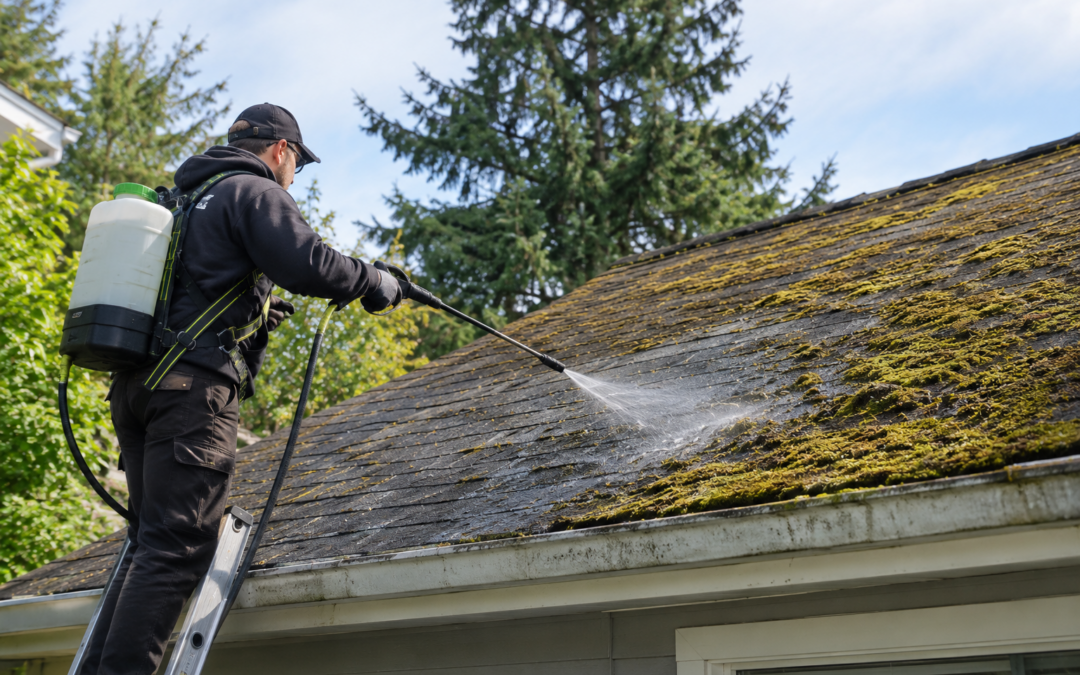
Moss, algae, and dirt can make a roof look old and lead property owners and visitors to believe it is deteriorating. When left untreated, these growths can contribute to moisture issues over time. Our eco-friendly roof cleaning and moss removal FAQs explain how environmentally responsible roof cleaning methods can remove moss, algae, and accumulated debris while minimizing potential harm to flowers, landscaping, and the surrounding environment. By choosing the proper cleaning procedure and maintaining a regular roof care routine, homeowners can protect their roofs, preserve their appearance, and help prevent moss from returning.
What Is the Best Eco-Friendly Moss Killer for Roofs?
Eco-friendly moss killer for roofs is a cleaning or treatment product that will help you control the appearance of moss while doing minimal damage to the environment. Some homeowners treating small moss patches use baking soda, vinegar, and oxygen-based cleaners.
Compounds containing oxygen (such as sodium percarbonate) are usually seen in a slightly more environmentally friendly light than chemical treatments with heavier ballast. On the other hand, the product has to be safe for the roofing material you are using and ought to be utilized in accordance with the recommendations.
And being natural or esoteric doesn’t mean it’s safe either. Runoff can still damage plants, soil, and water. Shield adjacent crops and rinse out affected sites, if suitable. For larger-scale infestations, we can provide a controlled treatment with roof-safe materials and low-pressure cleaning methods as part of our environmentally friendly moss removal procedures.
How Much Does Professional Roof Cleaning Cost?
Roof cleaning cost is influenced by many variables: roof dimensions, pitch, ease of access, type of roofing material, and amount of algae or moss that requires removal, along with the washing method used. As a rough guideline, kiosks cost about several hundred dollars for expert rooftop washing (more for much larger rooftops or those also heavily damaged).
DIY cleaning is less expensive up front, but it does require homeowners to factor in the cost of equipment, cleaning materials, safety equipment, and the possibility of damaged shingles.
Don’t just compare roof cleaning services on pricing. Ask what the quoted service includes.
A professional package may include:
- Moss and algae treatment
- Gentle roof cleaning
- Debris removal
- Gutter cleaning or inspection
- Roof condition checks
- Moss prevention treatment
- Documentation before and after
- Good documentation before and after
A comprehensive roof cleaning estimate can identify for you whether or not you are being billed for a basic surface cleaning service or a more thorough roof care treatment.
What Are Some Environmentally Friendly Roofing Materials?
When you are rebuilding your roofing, consider materials and solutions that will assist in sustaining long-lasting ecological demands.
- Metal roofing with a long service life
- Recycled-content roofing materials
- Cool roofing products designed to reflect more sunlight
- Reclaimed or recycled roofing materials where suitable
- Algae-proof shingles
- Roofs that can be recycled at the end of their life cycle.
The best option depends on your climate, pricing, roof style, and building codes in your area.
Curious about what green roofing really is and how it works in reality? Selecting proper materials and taking care of it also means reducing the need for roof repairs and reducing roofing waste.
Should You Pressure Wash Your Roof?
A high-pressure wash is not normally advised for cleaning asphalt shingles; it might harm the shingles and limit the life of the shingle. Excessive pressure can fracture granules, dislodge shingle sand, and drive water under the roofing materials, where it will worsen damage.
Soft washing, or generally low pressure, is the preferred alternative when the roofing material and condition allow. The objective is to remove moss, algae, and filth without causing any undue damage to the roof surface.
This is especially significant in the case of moss. Visible growth can be removed by heavy scrubbing or high pressure but may not remove growth under or around the region of concern.
If you’re unsure which approach is safe for your roof, have an expert evaluate it before cleaning.
What Kills Moss on Roofs Naturally?
The most commonly used natural moss removal products are several household or oxygen-based treatments. A popular suggestion for DIY is baking soda and vinegar, but oxygen-based cleaners could be a more targeted treatment.
But natural doesn’t always mean risk-free. Vinegar, baking soda, or other things might impact plants if they land in concentrated proportions in garden beds or soil. Incorrect cleaning might potentially damage roofing materials.
With the right precautions, a homeowner may be able to use a roof-safe solution in a small area. Professionals are more prepared to handle higher growth, steeper roofs, or difficult-to-access locations.
The greatest eco-friendly technique to get rid of moss is a combination of prevention and treatment. The problem can recur if moss is removed without removing the factors that promote it.
What Is the White Powder People Put on Their Roofs?
White powder sometimes used to treat roof moss could be a powdered moss-control chemical, such as an oxygen-based cleaning. Baking soda is another ingredient homeowners sometimes use when they have a tiny moss problem.
Other roof maintenance techniques include the use of mineral-based materials or strips of metal with zinc or copper along the roof ridge. Rain washing over these materials can help keep moss and algae from spreading further down the roof.
Before applying any powder or treatment, try it out to see if it works on the material of your roof. And you need to consider where the runoff is going to go, especially if the roof is close to gardens, lawns, pets, or water features.
When Should You Remove Moss From Your Roof?
It depends upon the local climate where you live; however, most of the gentler and, on the whole, drier climates are commonly less complicated for making sure of cleaning or inspection. Spring and fall are particularly beneficial home maintenance seasons because of the opportunity for homeowners to inspect their roofs prior to or after larger precipitation events where roof issues may arise, such as moss growth, debris, and clogged gutters.
Not to mention, it is harder to get rid of moss once thick mats have formed than when it is still young. Moss can hold moisture; as it grows, it is capable of lifting and breaking roofing material. Routine inspections can help you clean very small stains before they become more complicated to remove.
Is It Worth Cleaning Moss Off the Roof?
Moss removal is an important part of regular roof maintenance (especially when the moss has taken hold). That moss can get up under the tiles, or it can grow in between them and will attach itself to the material of your roof, holding water.
Cleaning the roof can also improve the look of the house by eliminating green moss, algae stains, and built-up garbage.
But cleaning has to be done carefully. The goal isn’t just to have a clean-looking roof for a few weeks. Good eco-friendly roof cleaning will not only remove current growth but also help to reduce the conditions that promote its return.
To prevent moss in the long run, keep the gutters clean, cut any branches that shade the roof too much, improve the air circulation, and get your roof inspected regularly.
What Are The Disadvantages Of Roof Cleaning?
Roof cleaning has its benefits, but it can also be dangerous if you use improper procedures.
Risk of Roof Damage
Walking on weak shingles or aggressive brushing can harm roofing materials, and excessive water pressure can damage them.
Security Risks
Working with ladders, heights, damp surfaces, and potentially steep slopes is part of cleaning a roof. If you don’t have the necessary equipment and experience, DIY projects might be deadly.
Damage to Landscaping
Cleaning solutions and runoff are damaging to grass, plants, and garden areas. A responsible cleaning technique for the environment should consider runoff and safeguard the surrounding landscaping.
Interim Results
Cleaning alone doesn’t guarantee moss won’t come back. Shaded, moist environments may stimulate new growth. So preventive maintenance is an integral aspect of the process.
It costs more to have professionals clean it than to do it yourself. But expert service can limit the possibility of roof damage and provide a more complete remedy.
How to Make Your Eco-Friendly Roof Cleaning Last
Here are some simple maintenance tips to help your green roof look nicer longer:
- Clean gutters and downspouts.
- Identify branches that are overhanging.
- Trim branches that shade the roof too much.
- Remove leaves and organic matter periodically.
- Regularly have roof inspections.
- Attack little spots of moss before they spread.
- Inquire regarding methods of roof moss eradication that will not be harmful to your roofs.
- Opt for cleaners that are suitable for your roofing material.
A maintenance plan can be a big benefit for properties surrounded by trees or in moist regions.
Choose Professional Eco-Friendly Roof Cleaning
Don’t wait until moss is a serious roof problem before you do something about it. Eco-friendly roof cleaning and moss removal can allow you to deal with undesirable growth with careful cleaning methods to protect your roof and the property around it.
A professionally conducted roof inspection will expose the safest way to clean your roof if moss, algae, stains, or a high level of debris are present. A quality roofing cleaning provider can analyze your specific top, present you with treatment options, and inform you how to create a plan for maintaining your top.
Ready to remove moss and restore your roof’s appearance?
Contact Referred Roof Cleaning for a professional roof cleaning estimate and learn about safe, eco-friendly cleaning options for your home.
Recent Comments