


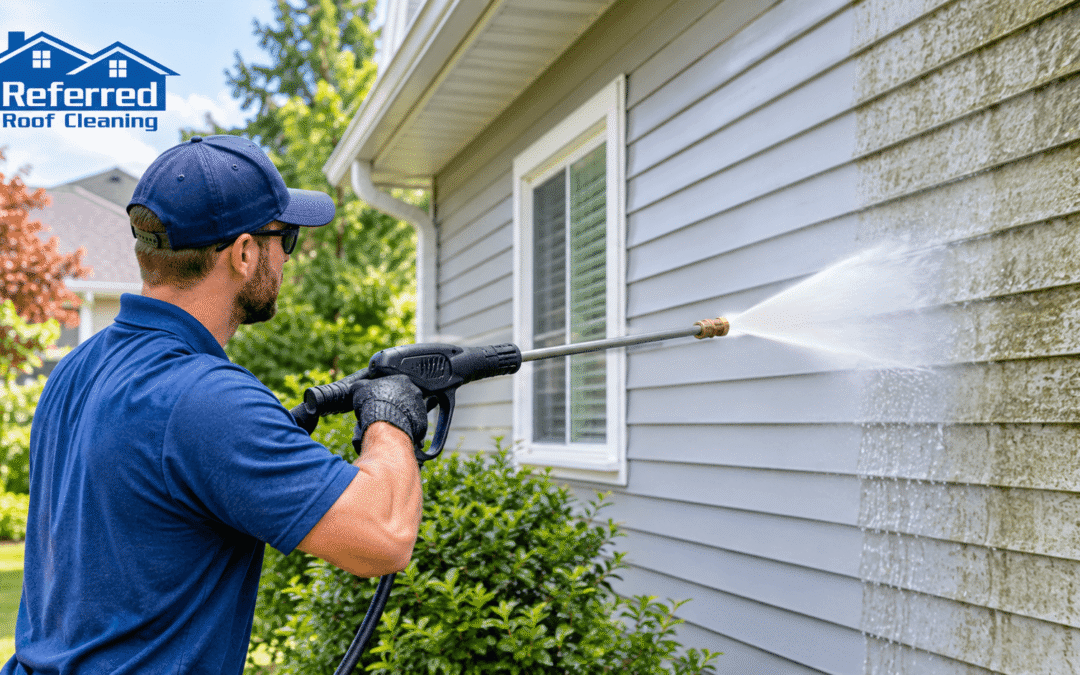
Pressure washing is one of the quickest ways to get rid of dirt, grime, mold, mildew, algae, and those stubborn stains that build up outside your home. Keeping up with it makes your place look better, protects your outdoor surfaces, and stops buildup before it becomes a bigger problem.
But most people have questions before they start. How often should you do it? How much pressure is too much? What does it cost? Which chemicals are safe? We’ve pulled together answers to the questions we hear most, whether you’re hiring a pro or planning to tackle it yourself. Hopefully they’ll help you make good choices and dodge the usual mistakes.
How often should I pressure wash my home?
For most houses, once every 12 to 24 months does the job. That said, the right schedule depends on where you live, how many trees are nearby, how humid it gets, and what shape your exterior is in.
You might need to wash more often if your home deals with:
- Mold and mildew. Humid weather makes siding and other surfaces a great place for them to grow.
- Dust and pollution. If you live near a busy road or a construction site, dirt settles faster.
- Tree sap and pollen. Nearby trees can leave sticky residue and stains behind.
- Algae. Shady, damp spots often turn green on siding, decks, and driveways.
Take a walk around your home every few months. If you spot dirt, dark streaks, or anything growing where it shouldn’t, don’t wait for your next yearly cleaning. Book it sooner.
What’s the difference between pressure washing and soft washing?
Think of it as force versus chemistry. Pressure washing blasts away mud, dirt, and grime with a strong jet of water. Soft washing goes easy on the surface: a cleaning solution does the heavy lifting on algae, mold, and mildew, and a gentle rinse carries it all off.
| Pressure washing | Soft washing | |
| Water pressure | Medium to high | Low |
| What does the work | The force of the water | The cleaning solution |
| Best for | Concrete, driveways, and other tough surfaces | Roofs, siding, and delicate materials |
| Surface risk | Depends on the pressure and the material. | Safe for many surfaces that can’t take high pressure |
Not sure which to choose? Start with what you’re cleaning. Concrete driveways, sidewalks, and sturdy patios can handle the pressure. Asphalt shingles, painted siding, and anything fragile are safer with a soft wash. The stain matters too: dirt and mud need force, while green or black growth needs a solution.
Can pressure washing damage my home?
It can, yes. If the pressure is too high, the nozzle is wrong, or the technique is sloppy, you can do real harm even while the dirt comes off.
Here’s what typically goes wrong:
- Paint. High pressure can strip paint from walls, fences, and wood.
- Siding. Water sneaks behind vinyl siding through tiny gaps and seams.
- Wood. Strong streams can gouge it, splinter it, or damage deck boards.
- Windows. A direct blast can crack the glass or wreck the seals.
- Roofs. Pressure can knock the protective granules off asphalt shingles.
- Concrete. When it comes to concrete, blasting it with too much pressure can wear down the surface—especially if the concrete’s not in great shape to begin with.
Here’s what works: choose the right pressure, nozzle, and approach for each surface. Keep a safe distance, and never aim water at outlets, vents, or other openings. If you’d rather not risk it, an experienced pro can save you from some expensive repairs.
How do I prepare for a pressure washing service?
Getting ready for a pressure washing service doesn’t take much, but it makes a big difference.
Before the crew shows up,
- Make sure all your doors and windows are closed tight—seriously, double-check them so water doesn’t sneak in anywhere.
- Next, move any outdoor furniture or decorations out of the way; just clear the area of chairs, tables, planters, and anything else you don’t want soaked or knocked over.
- Cover up outdoor outlets and fixtures. Use waterproof coverings properly.
- Move cars. Remove cars, motorcycles, and anything else from the work zone.
- Protect pets. Bring them inside or put them somewhere safe.
- Keep your plants safe. Cover any sensitive plants, such as flowers, bushes, and other attractive items in your yard, so cleaning chemicals do not come into contact with them.
- Make the area clear. Remove all unsecured items from your driveway and sidewalk, such as toys, tools, etc.
Plus, it helps to let your contractor know about any preexisting damage, loose siding, or leaking windows before they get started.
How much does pressure washing cost?
The price depends upon the amount of space that is being cleaned, which cleaning techniques are used to clean it, the degree of soiling that has occurred on items within that space, and the location in which you reside. Additional services such as stain removal, roof cleaning, and gutter cleaning will increase the overall price. To give you an approximate idea of typical residential pricing in the United States:
| Service | Estimated cost |
| Driveway | 100–300 |
| Sidewalk | 50–150 |
| Patio | 100–250 |
| House exterior | 200–600 |
| Deck | 100–300 |
| Fence | 150–400 |
Treat these as ballpark figures, not fixed rates. Real quotes depend on a few things: the state of your property, how much space needs cleaning, how easy it is to access, and what labor costs look like in your area. Ask for a detailed estimate upfront. Make sure it spells out everything: labour, equipment, cleaning products, and any extra charges.
How much should I charge to pressure wash a 2,000 sq ft house?
If you run your own pressure washing business, somewhere around $200 to $600 is typical in the US for a 2,000 sq ft house.
Where you land in that range depends on the job itself:
- Size. Bigger homes take more labor, water, and time.
- Material. Vinyl, brick, stucco, and painted wood each call for a different approach.
- How dirty it is. Heavy mold, mildew, algae, or tough stains mean extra treatment.
- Access. Multi-story homes and tricky spots push labor costs up.
- Chemicals. Specialty detergents add to your costs.
For a solid quote, add up your labor, equipment, chemicals, travel, and overhead, then tack on the profit margin you want. And try not to charge every 2,000 sq ft house the same price. Two homes the same size can be completely different jobs.
What’s the most common problem with pressure washers?
Low or uneven water pressure, by a wide margin. It makes the machine harder to use, and cleaning a lot less effective.
Usual suspects include:
- A clogged nozzle. Debris blocks the water flow.
- Weak water supply. A kinked hose or low flow from the tap cuts the pressure.
- Air in the pump. Trapped air interrupts the flow.
- A dirty inlet filter. If it’s clogged, not enough water reaches the pump.
- Pump trouble. Old seals or broken valves might pull down pressure.
Adhere to the maintenance plan in the instructions, and keep things going smoothly by cleaning the nozzle and checking your water supply and hoses. If you still notice the pressure jumping around, call a certified technician before firing up the machine again.
What surfaces should you skip when power washing?
Some materials just can’t handle a strong stream. They’re either delicate, porous, or easy to damage.
Stay away from high pressure on:
- Asphalt shingles. The pressure strips protective granules and shortens the life of the roof.
- Old or damaged wood. It can splinter and crack.
- Electrical panels. Water and electricity are a dangerous mix.
- Window screens. They tear easily, and the frames can come loose.
- Painted surfaces. Loose or weak paint will peel right off.
- Damaged brick and mortar. Pressure can weaken the joints, especially on older masonry.
- Outdoor light fixtures. Water can get into the wiring and ruin them.
For anything fragile, soft washing or a gentler method is the way to go. And it’s always smart to check the manufacturer’s cleaning advice first.
Should you pressure wash from top to bottom or bottom to top?
Usually top to bottom. That way, dirty water and loose debris run down and away instead of streaking across areas you’ve already cleaned.
For a house exterior, it goes like this:
- Start at the top of the walls.
- Work across one section at a time.
- Move gradually downward.
- Rinse off dirt and cleaning solution as you go.
- Finish with the lower walls and the ground around the house.
There’s one exception. Some cleaning solutions are best applied from the bottom up to prevent streaks, especially on certain vertical surfaces. The right technique depends on the material, the product, and the manufacturer’s directions. Whatever you do, don’t spray upward into siding gaps, vents, or other openings.
What are the best chemicals to use when pressure washing?
There’s no single best one. It depends on the surface and what you’re cleaning off. The right solution gets better results and means you don’t have to crank up the pressure. Here are the common ones:
| Chemical | What it’s used for |
| Sodium hypochlorite | Mold, mildew, algae, and organic stains |
| Sodium hydroxide | Grease, oil, and heavy organic buildup |
| Surfactants | Helping solutions spread and loosen dirt |
| Mild detergents | General exterior cleaning |
| Oxalic acid | Certain rust and wood stains |
A few safety rules worth following:
- Follow the manufacturer’s dilution instructions every time.
- Use a product made for the surface you’re cleaning.
- Wear gloves and eye protection.
- Shield nearby plants and landscaping.
- Never mix bleach with ammonia, acids, or other cleaners that don’t play well together.
- Check your local rules on wastewater disposal.
And remember, stronger isn’t automatically better. Pick a suitable product and use it as the label says.
How much to charge for 4 hours of pressure washing?
That depends on your hourly rate, your costs, and the job. In the US, pressure washing labor commonly runs about $50 to $150 an hour, depending on your market, your experience, and the type of work. At those rates, four hours would look like this:
| Hourly rate | Total for 4 hours |
| $50 | $200 |
| $75 | $300 |
| $100 | $400 |
| $125 | $500 |
| $150 | $600 |
These are rough numbers, not an industry standard. When putting together a quote, make sure to include:
- Labor and estimated hours
- Maintenance and equipment
- Travel and fuel
- Chemicals and supplies
- Business overhead and insurance
- The profit margin you want to make
For larger projects, a per-square-foot price or a fixed cost might be better than an hourly rate. Whatever way you select, be sure you properly explain what your project is.
What’s the difference between pressure cleaning and power washing?
Both use high-pressure water. However, there is a major difference in terms of temperature. Power washing uses hot water, whereas most times pressure washing does not use heated water.
| Power washing | Pressure washing | |
| Water temperature | Heated | Usually unheated |
| How it cleans | Heat plus pressure | Water pressure |
| Best for | Grease, oil, and stubborn grime | General dirt, mud, and exterior buildup |
| Equipment | Has a heating system | Usually no heater needed |
Power washing works well on greasy or oily stains on suitable concrete. Pressure washing is the best choice for driveways, sidewalks, patios, and other tough outdoor areas. With either one, you still need the right pressure settings and technique, or you can damage the surface.
Wrapping up
Knowing these pressure washing FAQs makes it a lot easier to look after your home and avoid the mistakes people make with exterior cleaning. From picking between pressure washing and soft washing to understanding costs, chemicals, and equipment care, a bit of knowledge saves you time and money.
Before you start any project, think about the surface material, what you’re trying to clean, and how much pressure it can take. And if you’re not sure which method is right, bring in a professional. It’s a small price for protecting your property and getting a better result.
Recent Comments